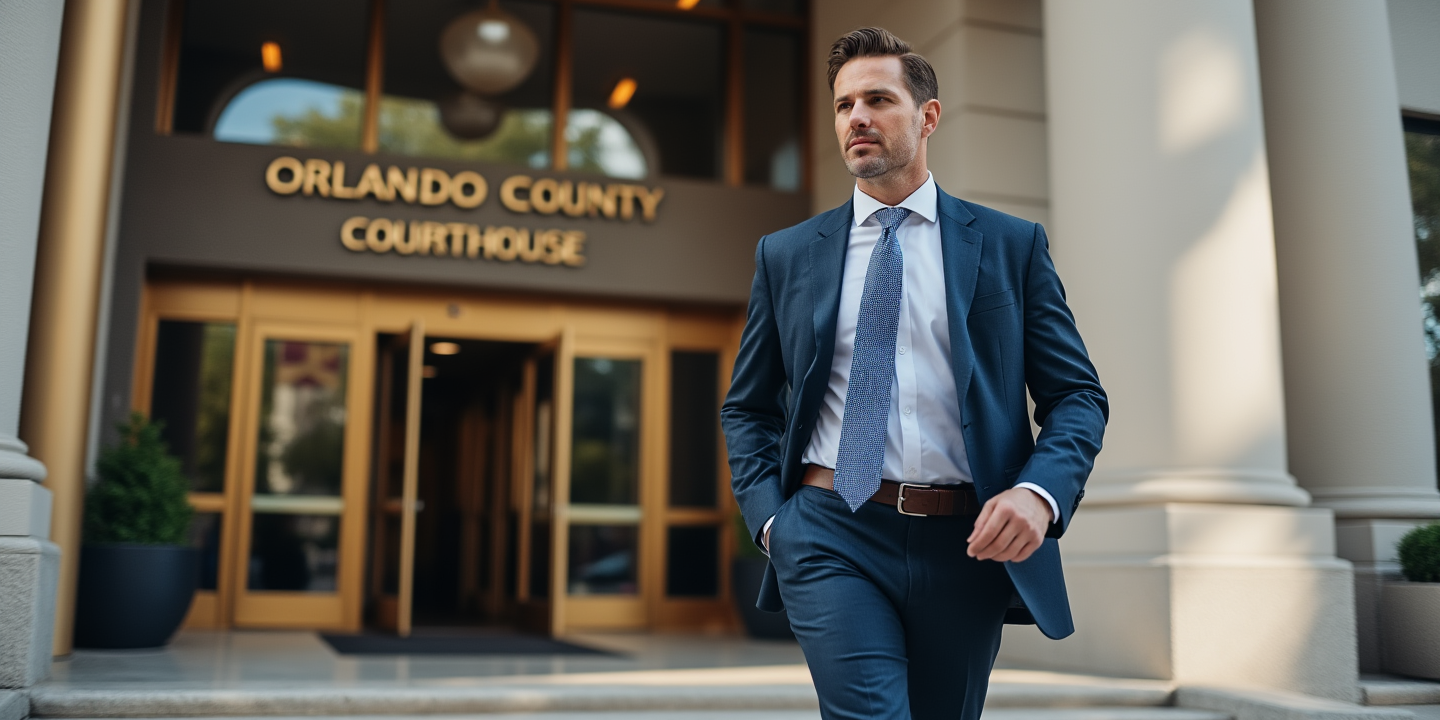
When a trial in Tampa bleeds into late afternoon and suddenly you’ve got a client crisis at 4:40 p.m., or a judge in the Ninth Judicial Circuit schedules a case management conference that directly conflicts with a deposition already noticed across county lines—that’s when most firms reveal their real problem. They either burn cash sending a partner to sit through a nine-minute docket call, or they roll the dice and hope for a continuance. What most Orlando-based practices don’t realize is that an experienced Orlando appearance attorney has already solved this exact scenario dozens of times. They’ve found the third option—the one that doesn’t bleed your hourly rate or leave your clients hanging—and it’s become essential to how serious firms actually operate.
Stage One: The Conflict Surfaces, Usually at the Worst Possible Hour
A trial in Tampa runs long. A client emergency detonates at 4:40 p.m. A judge in the Ninth Judicial Circuit sets a case management conference that collides with a deposition already noticed in another county. This is the moment where most firms make their expensive mistake: they send a partner billing at a premium rate to sit through a nine-minute docket call, or they send nobody and gamble on a continuance.
Neither choice holds up under scrutiny. The economics of covering a routine hearing with senior in-house time are poor, and failing to appear in Orange or Osceola County is worse than poor. Judges remember it. Opposing counsel remembers it longer.
Here is how the three realistic options compare when the hearing is tomorrow morning:
|
Coverage Method |
Typical Time to Confirm |
Cost Exposure to the Firm |
Main Risk |
|---|---|---|---|
|
Send an in-house associate or partner |
Immediate, if someone is free |
Full internal rate plus travel and lost billable hours elsewhere |
Cannibalizes higher-value work; often nobody is actually free |
|
Call local colleagues one by one |
One to several hours, frequently unsuccessful |
Negotiated ad hoc, plus substantial staff time |
No fallback when the list runs out at 6 p.m. |
|
On-demand nationwide network |
Often under one minute in metropolitan areas |
Flat, quoted per appearance before acceptance |
Requires a disciplined handoff packet |
The third row is where AppearMe operates. A request is broadcast simultaneously to every qualified Orlando appearance attorney in the network who covers Orange, Osceola, Seminole, and the surrounding counties. The first available per diem lawyer accepts. There is no waiting on returned voicemails and no awkward favor-trading with a firm you may be adverse to next quarter.
Stage Two: The Handoff, Where Most Coverage Actually Fails
Securing counsel is the easy part now. The handoff is where quality separates.
A covering attorney needs the case style and number, the division and judge, the specific relief sought, the authority to agree or not agree to a continuance, and a clear instruction on what to do if the court asks a question outside the scope. Rule 2.505 of the Florida Rules of General Practice and Judicial Administration governs how an attorney enters and withdraws from a case, and a limited appearance must be handled correctly so that nobody accidentally becomes counsel of record on a file they will never touch again. Firms that send a one-line email reading “CMC at 9, just agree to the schedule” are the firms that later complain about per diem quality. The problem was upstream.
Build the packet once as a template. Litigation managers, case managers, and paralegals can populate it in four minutes, and the same document works whether the hearing is in Orlando, Jacksonville, or Fort Lauderdale.
Stage Three: The Courtroom Itself, and the Bail Bond Process in Orlando
The Ninth Judicial Circuit serves Orange and Osceola counties, with the main civil and criminal divisions housed at the Orange County Courthouse in downtown Orlando and additional proceedings in Kissimmee. Parking downtown is genuinely difficult before 9 a.m., which is one reason an experienced Orlando appearance attorney outperforms counsel driving in from another market. A lawyer who already knows which garage clears fastest arrives calm and on time.
Criminal matters carry a tighter clock. Under Florida Rule of Criminal Procedure 3.130, a defendant who is not released must be brought before a judge within 24 hours of arrest, and in Orange County those first appearance proceedings are conducted by video link from the jail on weekend mornings as well as weekdays. That compressed window is exactly why the bail bond process Orlando defendants encounter moves so quickly and why retained counsel so often cannot be physically present. A judge sets conditions of release, a surety agent licensed and regulated by the Florida Department of Financial Services posts the bond, and the family wants to know why their attorney was not standing there.
An Orlando appearance attorney solves that. Someone is present for the court appearance, argues the pretrial release factors, notes the court’s conditions accurately, and reports back. Premium rates on surety bonds are filed with state regulators rather than invented at the counter, so confirm the current figure directly with the Department of Financial Services before quoting anything to a client. Do not guess at it from memory.
For civil work, the pattern is less dramatic but more frequent. Case management conferences, motions to compel, uncontested calendar calls, status checks, and hearings that were continued twice already. These consume an extraordinary share of a small firm’s week and almost none of its revenue. Delegating them to a per diem lawyer is not a compromise in service quality. It is a correction of how the hour is valued.
Stage Four: The Report Back, and Who Actually Gets Paid
A written appearance report should land the same day: what was heard, what the court ordered, what deadlines were set, what the judge signaled. Anything less leaves the file blind.
On the other side of the transaction, payment reliability determines who keeps answering requests. Covering attorneys who have been stiffed by one firm stop accepting work generally, which thins the available pool for everyone. AppearMe pays appearance counsel the same day, with guaranteed payment for work performed, whether the matter was attended in person or remotely, and whether the assignment was a hearing, a deposition, or drafted motion work. That reliability is why the network stays deep enough to fill an Orlando appearance attorney request at 8:20 a.m. for an 8:45 a.m. docket.
So How Late Can You Really Book One?
Later than you think, and later than your scheduling habits assume. Metropolitan Central Florida coverage frequently confirms inside sixty seconds, which means the honest answer to the question is that the constraint is no longer availability but preparation. Write the handoff template this week, store it where every case manager can reach it, and the next conflict costs you four minutes instead of an afternoon.
Limited Appearance, Conflict Checks, and the Rules That Actually Govern the Handoff
A per diem engagement is a limited-scope representation, and Florida treats it as one. Rule 4-1.2(c) of the Rules Regulating The Florida Bar permits a lawyer to limit the objectives of representation if the limitation is reasonable and the client gives informed consent. In practice that means the retained firm, not the covering lawyer, carries the burden of explaining to the client that a different attorney will stand up at the 9:00 a.m. calendar. Most clients accept this without friction when told in advance. Almost none accept it gracefully when they discover it in the gallery.
Conflicts move faster than paperwork. Before any file material changes hands, the covering attorney needs the full caption, the opposing parties, and the insurers or corporate affiliates involved, because imputed disqualification under Rules 4-1.7 and 4-1.10 does not pause for a same-morning emergency. Send the conflict data before the substantive documents. Confidentiality under Rule 4-1.6 attaches the moment the appearance lawyer receives privileged material, which is another argument for the narrow, purpose-built handoff memo rather than dumping an entire case folder into a shared drive.
One procedural detail trips up out-of-state coordinators constantly: whether the covering lawyer files a notice of appearance at all. For a single non-dispositive hearing, many Ninth Circuit judges simply note the appearance on the record and move on, and the retained attorney remains counsel of record. Confirm the division’s preference before the hearing, because a stray notice of appearance can create an unintended obligation to seek leave to withdraw later.
Remote Hearings: When the Video Link Helps and When It Quietly Hurts
Florida Rule of General Practice and Judicial Administration 2.530 governs the use of communication technology in court proceedings, and it draws a meaningful line between testimonial and non-testimonial matters. Routine case management conferences, scheduling disputes, and many unopposed motions are comfortably handled by audio-video connection. Evidentiary hearings are a different animal, and judges retain substantial discretion over whether witnesses appear remotely at all.
This matters for coverage planning because a remote-eligible hearing widens the candidate pool statewide, while an in-person evidentiary setting narrows it to lawyers who can physically reach downtown Orlando before the doors open. Firms that tag each hearing as remote-eligible or not, at the moment of scheduling, cut their emergency staffing failures dramatically. The distinction also shapes the bail bond process Orlando families navigate, since first appearance is already conducted by video from the jail and family members frequently cannot attend in any form. An Orlando appearance attorney who can relay the precise conditions of release, the bond amount, and any no-contact order becomes the only reliable source of information that household has.
The Counties Nobody Remembers to Ask About
Greater Orlando is not one jurisdiction. The Ninth Judicial Circuit covers Orange and Osceola. Seminole and Brevard sit in the Eighteenth. Lake County belongs to the Fifth, and Polk to the Tenth. A client who describes their matter as “in Orlando” may have a hearing in Sanford, Kissimmee, or Tavares, each with its own calendaring customs and travel math.
Federal matters add another layer: the Orlando Division of the U.S. District Court for the Middle District of Florida sits downtown, and coverage there requires admission to that court’s bar, not merely Florida Bar membership. Ask the question early. Discovering it at 7:40 a.m. is an expensive way to learn geography.


